Programme


A. The basics
1. What is the Emil Bührle Collection?
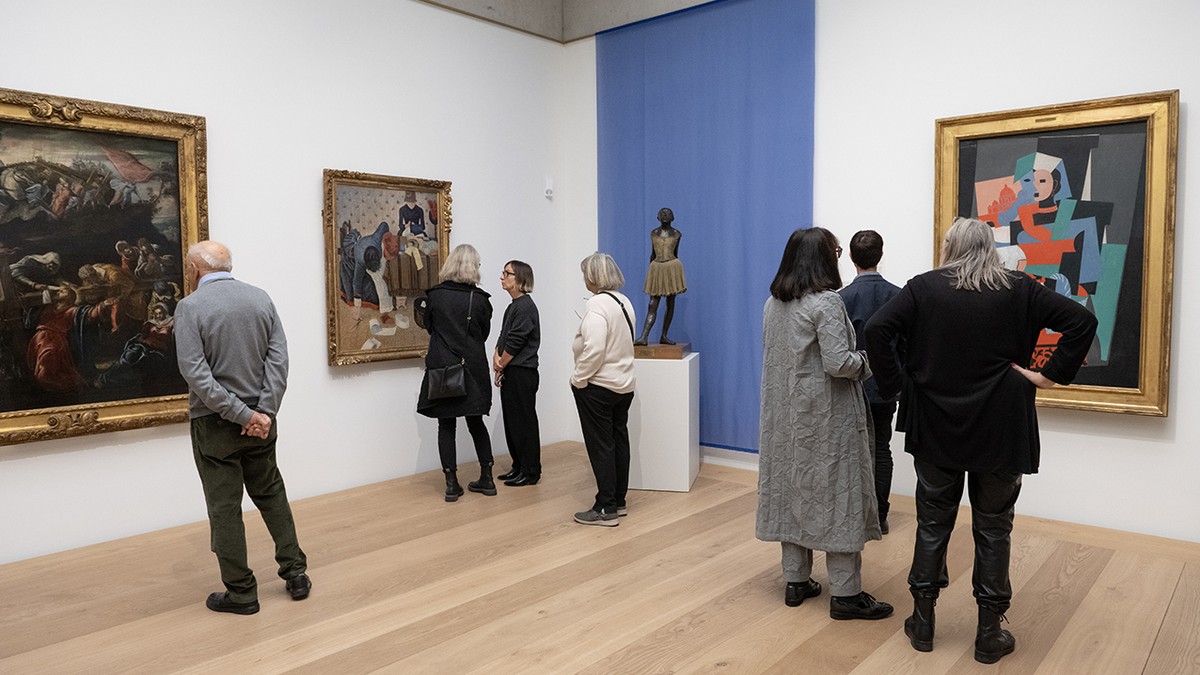
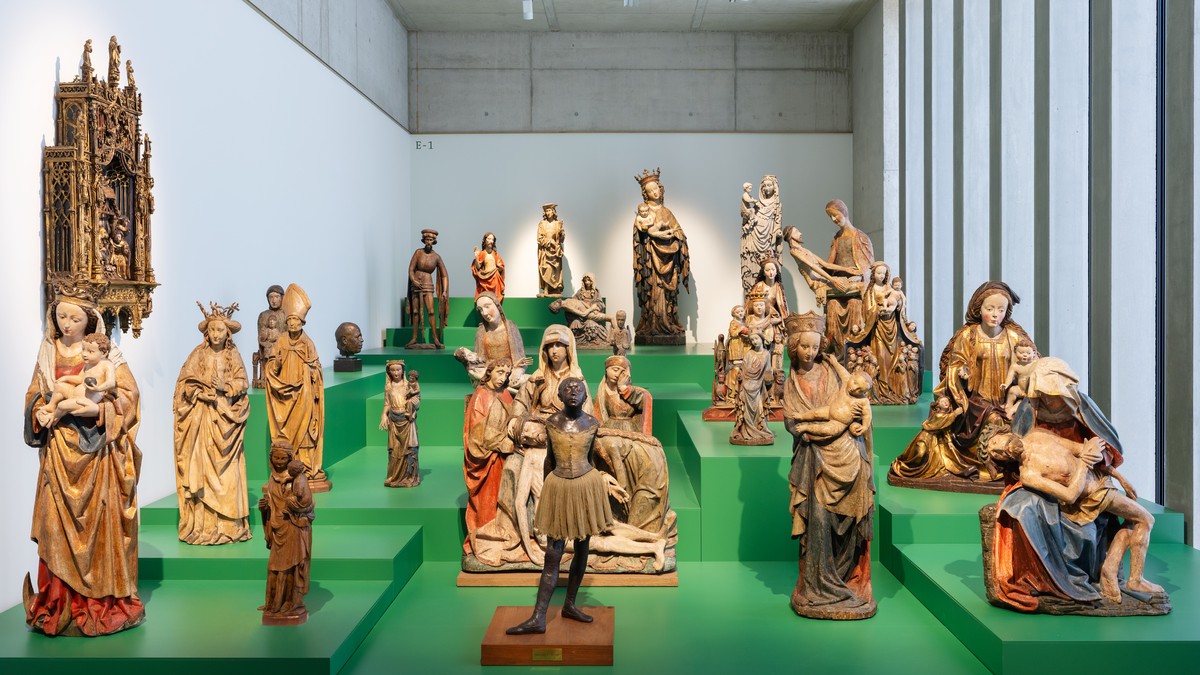
The collection ranges from medieval sculptures through Dutch and Italian Old Masters to works of Classical Modernism. Its main focus is on Impressionist and Post-Impressionist painting. When Emil Bührle died, his private collection comprised 633 works. Following his death, in 1960 his heirs set up a foundation to which they transferred some of those works. Now numbering 205 in total, these are owned by the Foundation and have been on long-term loan at the Kunsthaus since 2021. They have not been donated to the Kunsthaus. The other works remained in private hands in 1960, and some of them were later sold.
2. Who does the Collection belong to, and who is showing it?
The collection of Emil Bührle belongs to the Foundation E. G. Bührle Collection, a private, charitable foundation. It is displayed at the Kunsthaus Zürich on the basis of a long-term loan agreement signed in 2022 between the Foundation and the Zürcher Kunstgesellschaft, the patron association of the Kunsthaus Zürich. This long-term loan agreement is in the public domain. The subsidy agreement of 2022 with the City of Zurich sets out additional obligations regarding provenance research and contextualization. This agreement is also in the public domain. In May 2025, new guidelines on the collaboration were additionally agreed with the Foundation E. G. Bührle Collection. The media release, including the guidelines, can be found here.
3. Are all the works from the long-term loan on constant display?
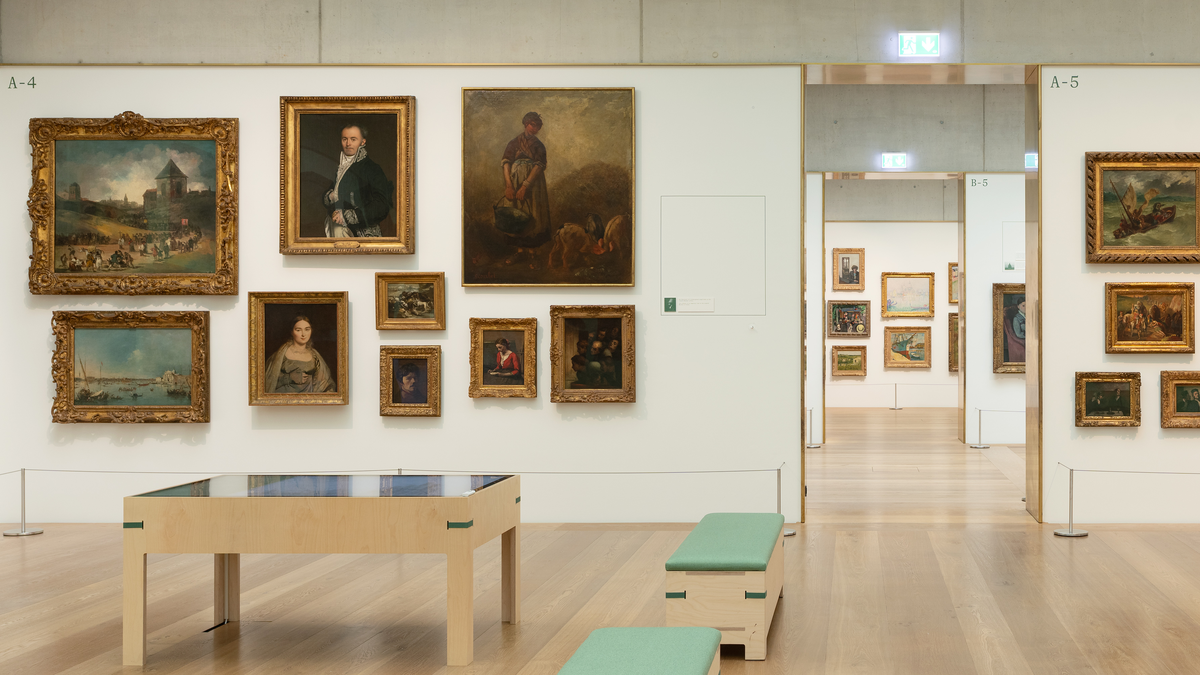
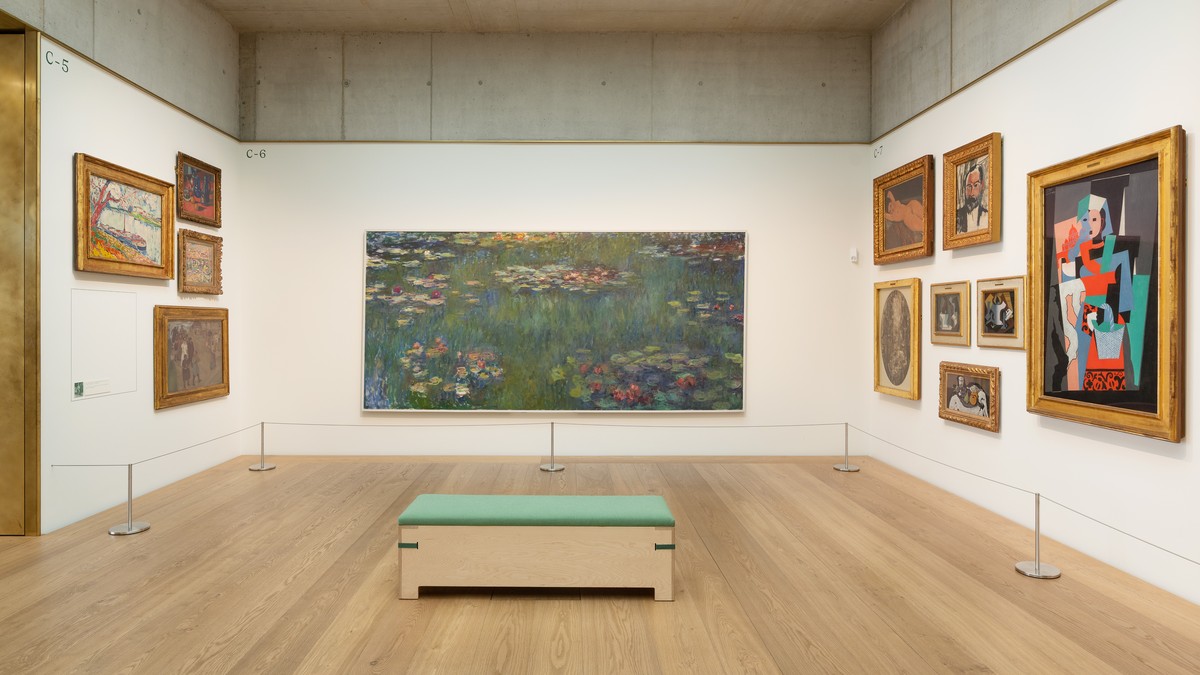
No. Under the terms of the agreement, the Kunsthaus must in principle display the long-term loan as a single entity in the Chipperfield building, and always shows a representative selection and number of works from the loan (long-term loan agreement, Art. 5.a). From October 2021 to September 2022, some 160 works were on show, and from October 2022 to September 2025 approximately 115. Under the guidelines adopted in 2025, the Kunsthaus undertakes to display at least half of the 205 works at any given time. From 10 April 2026, a new interim presentation will include all of the works from the long-term loan. The only exceptions are works that are currently on loan to other museums, or for which the Bührle Foundation is seeking an agreement with the legal successors of the previous owners. These works will be indicated by an empty space on the wall and a placeholder label in the exhibition.
4. What does the long-term loan agreement govern?
The agreement sets out the legal framework for the Collection’s presentation at the Kunsthaus, in particular the term, academic collaboration, provenance research and insurance for the works. The agreement runs until the end of 2034, and is automatically extended by five years at a time unless one of the parties terminates it. Termination is possible for the first time with effect from the end of 2034, subject to notice being given by the end of 2031. (Link to the agreements (in German))
5. Does the Foundation’s recent decision to amend its statutes have any impact on the long-term loan?
No. The amendment was communicated following approval (in German) by the Foundations Supervisory Authority, and affects neither the 2022 long-term loan agreement nor the guidelines (in German) for the presentation of the Collection published in May 2025. At the end of 2025, the City of Zurich appealed against the ruling of the cantonal OPA and Foundations Supervisory Authority, which had approved an amendment to the purpose of the Foundation E. G. Bührle Collection. The City is requesting a judicial review, as it is no longer mentioned in the new purpose.
6. What does the amendment to the statues mean in concrete terms?
The Foundation has publicly stated that the amendment to the statutes was intended to clarify that it can also make the Collection accessible to the public outside the city of Zurich.
7. What is the Kunsthaus’s fundamental position on the Bührle Collection?
The Board of the Zürcher Kunstgesellschaft considers it a privilege to be permitted to show the works from the Bührle Collection at the Kunsthaus. It displays the Collection, and researches and contextualizes it on an ongoing basis; this is also set out in the subsidy agreement with the City of Zurich.
B. Provenance research and responsibility
8. What is meant by ‘provenance research’?
Provenance research investigates the ownership history of a work of art from the time of its creation to the present day: who acquired it, when, and under what circumstances? As in many museums both in Switzerland and elsewhere, research focuses in particular on whether works were unlawfully seized, disposed of or sold under duress during the Nazi period; it also covers works with a colonial context and possible confiscations from the Soviet occupation zone / German Democratic Republic.
9. What principles does the Kunsthaus Zürich operate under?
The Kunsthaus researches the provenances of the collection holdings systematically, without defined outcomes and in accordance with international standards, with the conclusions being progressively published in the online collection. The principles are laid down in a Kunsthaus provenance strategy published in 2023. Under the terms of the subsidy agreement with the City of Zurich, this also involves a review of the works on long-term loan to the Kunsthaus. Provenance research is conducted on the basis of the International Council of Museums (ICOM) Code of Ethics for Museums and in accordance with the Washington Principles (1998) and the Terezín Declaration (2009). They impose commitments to investigate cultural property confiscated as a result of Nazi persecution and seek ‘just and fair’ solutions with the owners or their legal successors.
Decisions on these matters may only be taken by the owners. In the case of the Kunsthaus’s own collection, the provenance strategy states that this responsibility lies with the Board of the Zürcher Kunstgesellschaft. This means that as far as the works from the Emil Bührle Collection are concerned, decisions on ‘just and fair solutions’ lie with the Foundation E. G. Bührle Collection, as owner of the works. In this case, the Zürcher Kunstgesellschaft is only the borrower.
Washington Principles (1998)
The Washington Principles form the basis for research into, and treatment of, Nazi-looted assets. They have been adopted as a legally non-binding declaration by 44 states, including Switzerland and the US. ‘Legally non-binding’ means that they do not constitute directly applicable law, and no actionable claims may be derived from the Principles themselves; rather, they constitute a political and moral obligation imposed by the signatory states and their institutions on themselves.
The aim of the Principles is, in particular, to identify Nazi-looted art and investigate the provenances of the cultural property concerned. Where ownership is disputed, alternative solutions – such as specialized commissions – should be set up to arrive at ‘just and fair solutions’ between the descendants of the former owners on the one hand, and the current holders on the other.
In the US too, the Washington Principles operate primarily outside the realm of the courts, specifically in provenance research and restitution negotiations. The courts do not enforce them as binding law, but decide on the basis of the applicable US law.
Adopted to mark 25 years of the Washington Principles and signed by Switzerland, the Best Practices for the Washington Conference Principles on Nazi-Confiscated Art (2024) provide an updated basis for dealing with cultural property confiscated as a result of Nazi persecution.
Terezín Declaration (2009)
The Terezín Declaration expanded the definition of looted art contained in the Washington Principles, setting out rules covering cultural property sold under duress owing to Nazi persecution.
ICOM Code of Ethics for Museums (2004)
The International Council of Museums (ICOM) Code of Ethics for Museums sets minimum standards for professional practice and is referenced in the ICOM Statutes. It reflects principles that are generally recognized within the international museum community. With regard to provenance and due diligence, every effort must be made before acquisition to ensure that any object or specimen offered for purchase, gift, loan, bequest, or exchange has not been illegally obtained in, or exported from, its country of origin or any intermediate country in which it might have been owned legally (including the museum’s own country). Due diligence in this regard should establish the full history of the item since discovery or production.
10. What does the Kunsthaus’s provenance strategy say specifically?
The Kunsthaus strategy agreed in 2023 adopts a historically critical, differentiated approach that ensures both scientific precision and transparency vis-à-vis the public. It includes a comprehensive review of new accessions and loans, transparent and solution-oriented treatment of sales outside the area of Nazi rule, and a proactive approach to suspicions of cultural property confiscated as a result of Nazi persecution, along with a decisive process once specific circumstances have been clarified.
11. Who carries out the provenance research?
The provenance research is carried out by the Kunsthaus’s own provenance department, headed by Dr Joachim Sieber. His department’s research responsibilities relate firstly to the Kunsthaus’s own collection, and secondly to the long-term loans. The research reports are independently peer reviewed and, starting in 2026, the case assessments will be overseen by an independent commission of experts (provenance research advisory panel), which also advises the Kunsthaus on technical matters.
In 2023, the City and Canton of Zurich and the Zürcher Kunstgesellschaft (ZKG) commissioned the historian Raphael Gross to review the research into the works carried out to date by the Foundation E. G. Bührle Collection. As a consequence of this, research by the Kunsthaus into the works from the Bührle Collection was suspended.
The Kunsthaus will resume research into the collection of the Foundation E. G. Bührle Collection immediately, following approval by the City of Zurich in February 2026 of funding for a five-year research project.
The ZKG plans a five-year research project covering the provenance of the works in the Foundation E. G. Bührle Collection. This will be conducted in accordance with the high standards for provenance research adopted by the ZKG. The ZKG will systematically inspect and categorize all works and, where necessary, carry out more in-depth research into their provenance. The results, in the form of research reports, will be categorized in accordance with a review procedure developed by the ZKG which will also, working with the University of Zurich Department of Art History under its head Prof. Bärbel Küster and provenance research lecturer Dr des. Mattes Lammert, carry out extended fundamental research into the history of the Foundation E. G. Bührle Collection in the local, national and international context. Two doctoral positions on current research topics relating to the history of the art market, institutions and collections in Switzerland will be funded for this purpose.
The ZKG plans further steps to ensure the quality of provenance research and its appraisal:
Collaboration with the University of Zurich Department of Art History
This will permit in-depth fundamental research as well as ongoing specialist exchange on research standards and methodology. Over the long term, this academic cooperation will expand and embed local expertise.
Peer review
Appraisal of the Kunsthaus’s provenance research by external experts: the Kunsthaus’s research reports will be peer reviewed in accordance with scientific standards.
Expert commission
Establishment of an independent expert commission (as a scientific advisory panel): this will advise the ZKG on technical and ethical issues and methodology, review the proposed selection of experts for the external appraisal, and independently evaluate the research results.
12. Who are the members of the independent expert commission?
The independent expert commission consists of three members specializing in provenance research, history and law appointed by the board of the ZKG.
- Prof. Christina Späti, Professor of Contemporary History, University of Fribourg, research fields: the Holocaust and its subsequent history, anti-Zionism, anti-Semitism and Orientalism
- Dr Herbert Winter, lawyer, former head of the Swiss Federation of Jewish Communities (SIG), Zurich
- The provenance research specialist position is currently vacant.
13. How is the provenance research funded?
At present, research into the provenance of the Kunsthaus Collection is funded by the Kunsthaus Zürich itself, with financial support from the Canton of Zurich fund for culture and project promotion from the Federal Office of Culture (FOC). Funding for a multi-year research project into the Emil Bührle Collection was approved in February 2026 by the City of Zurich Parliament.
14. Are the results of provenance research available to the public?
Yes. The Kunsthaus publishes the progress and results of previous and ongoing projects in its online collection, project reports (www.kunsthaus.ch/en/sammlung/provenienzforschung/) and specialist publications.
15. Why are the backs of the works important, and will these be made accessible?
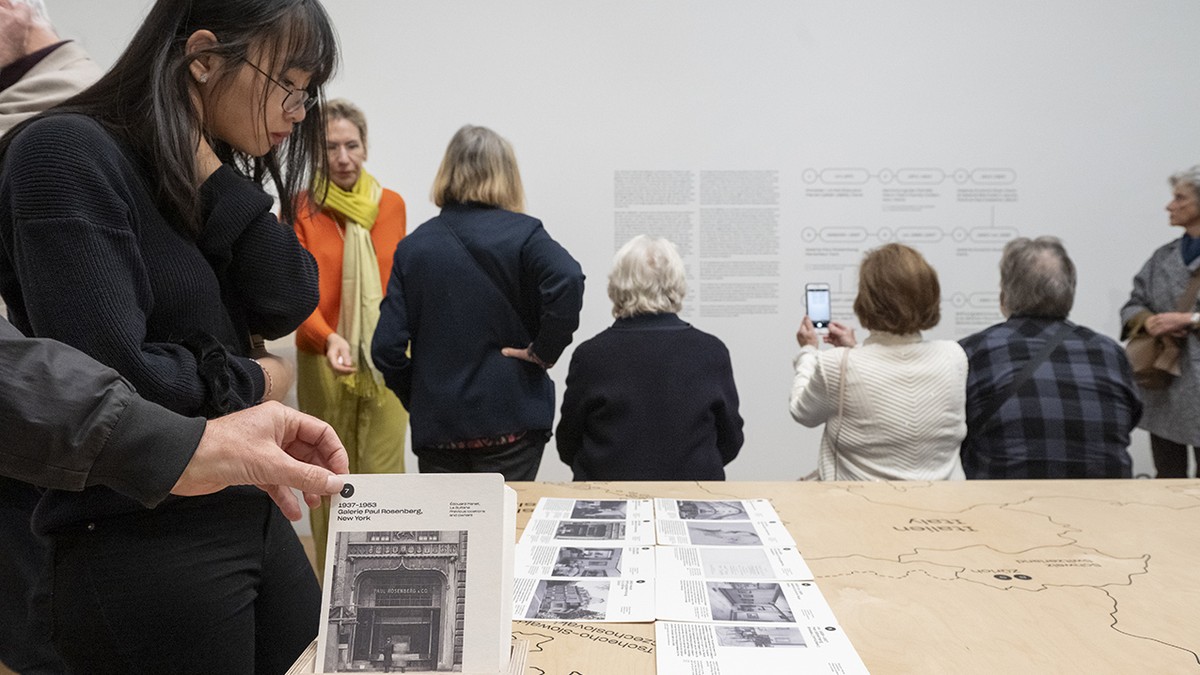
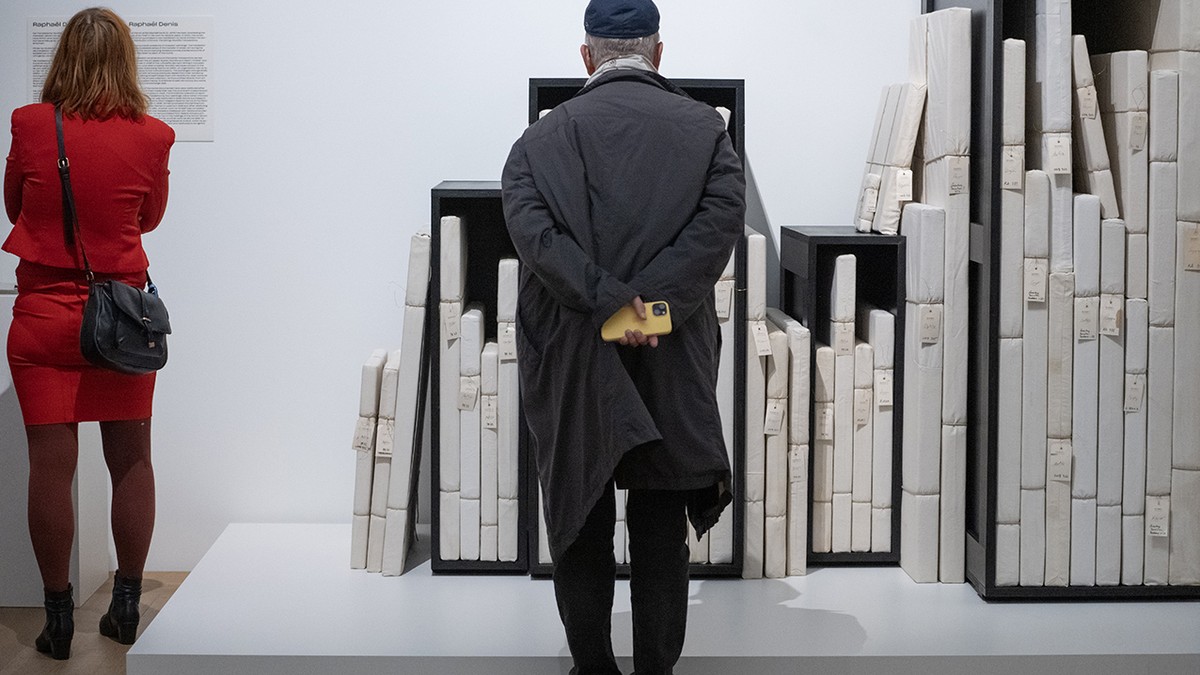
The backs of works often contain labels, stamps and notes that can provide clues to their ownership history: where a work was exhibited, where it was transported to and by whom, etc. Since 2021, the Kunsthaus has systematically documented the backs of works, and, since August 2025, has been progressively publishing these in its online collection. Owing to the technical limitations of the MuseumPlus software, inscriptions are not yet visible in full resolution, but they are transcribed; high-resolution files are available on request.
C. Exhibitions and the future
16. What will be on show in the 2026 interim presentation?
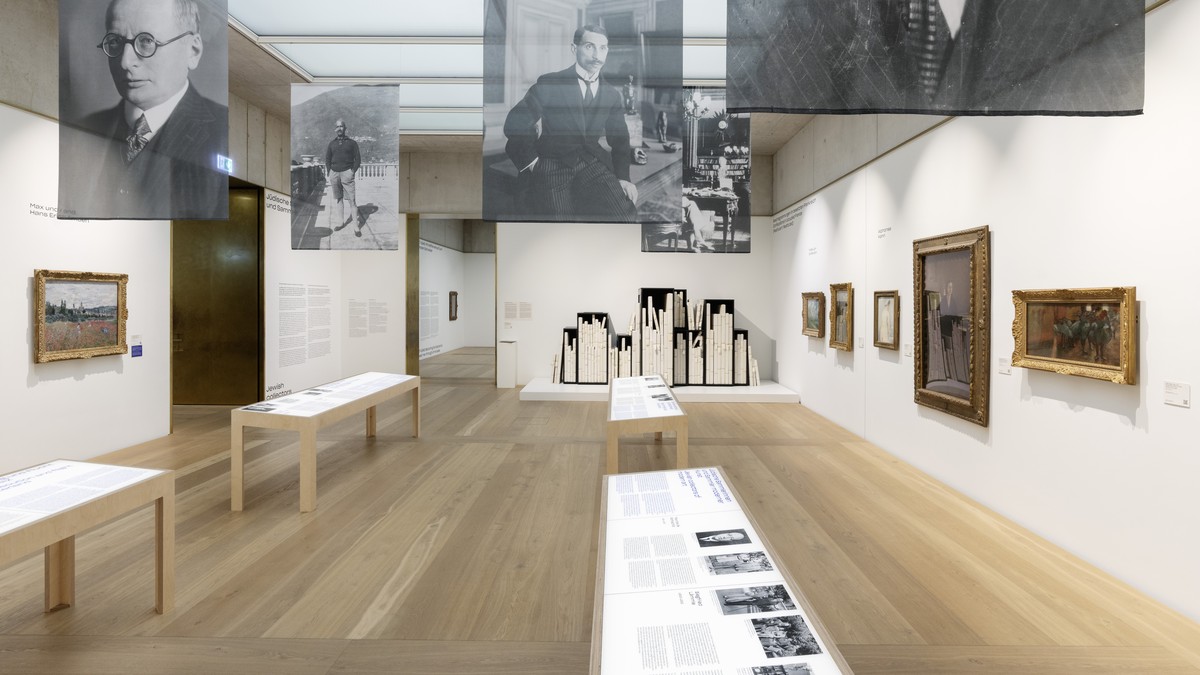
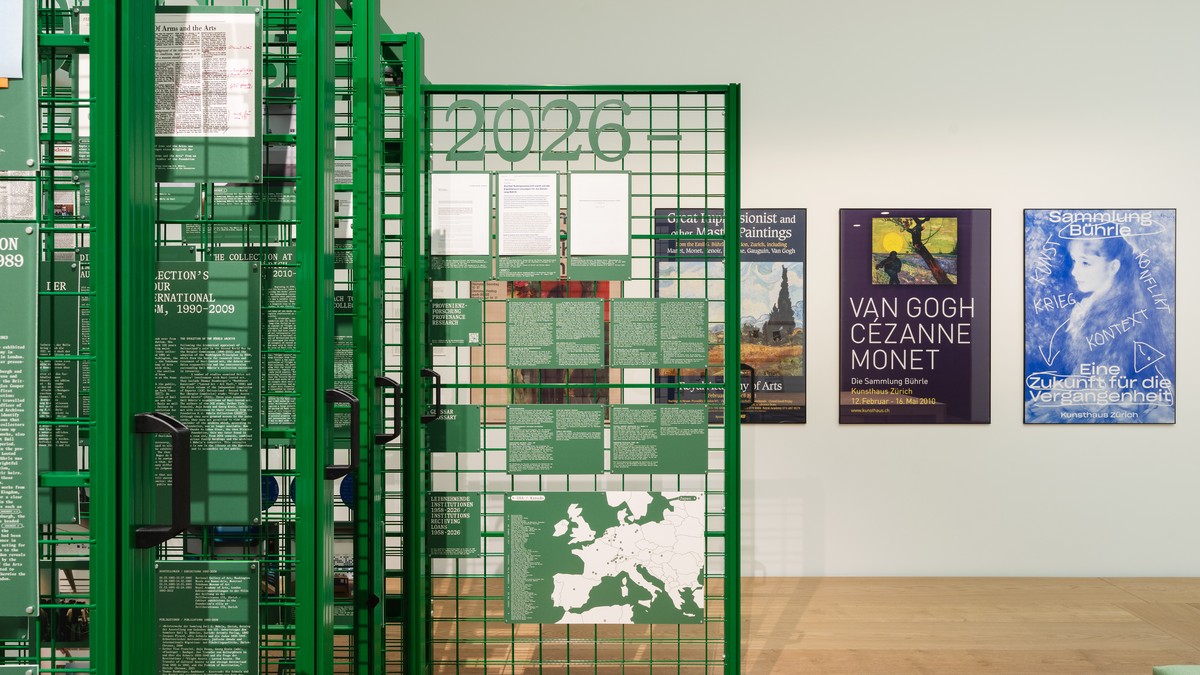
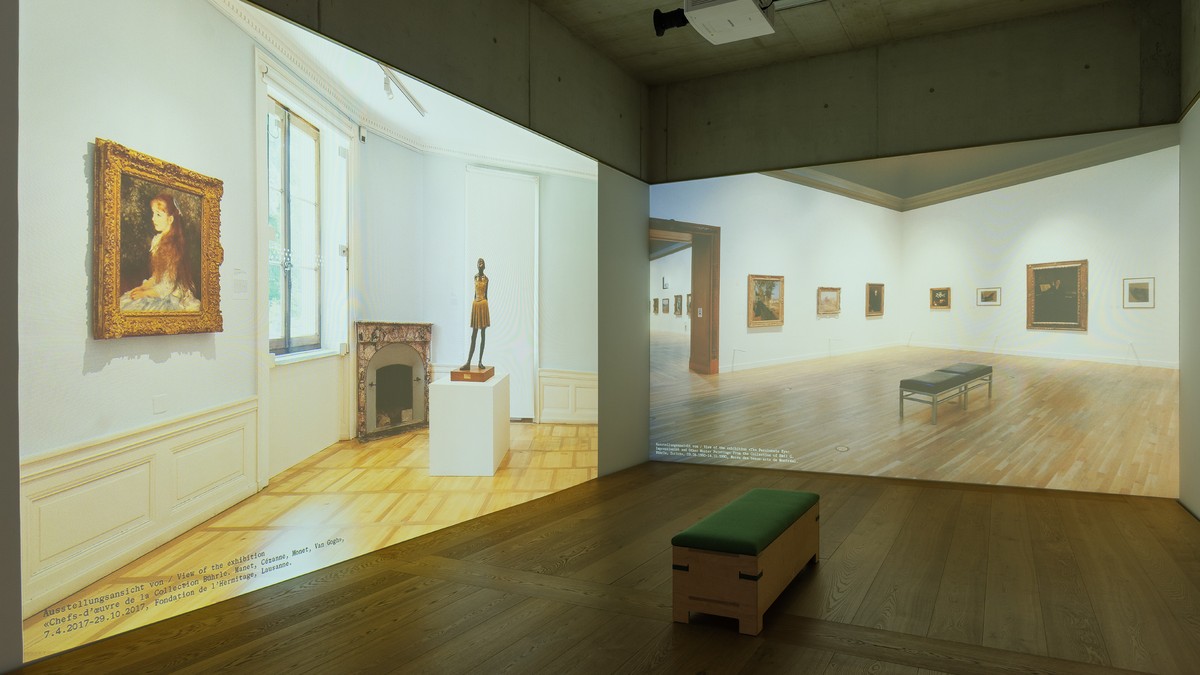
The exhibition will be designed as a kind of visible storage presentation, in which as many as possible of the works from the collection of the Bührle Foundation that are on loan to the Kunsthaus will be on display. These will be complemented by archive documents presenting the exhibition history of the Collection and its public reception in various countries and at various times. The new main presentation is expected to open in 2027/2028.
17. What happens to works whose provenance is unclear or tainted?
Under the terms of the subsidy agreement with the City of Zurich, the Kunsthaus is not permitted to exhibit any works where there are substantiated indications that they were confiscated as a result of Nazi persecution. Works whose provenance is unclear are systematically researched by the provenance department, which labels them in its own collection presentation using the Bern traffic light system. This is done in the interests of transparency.
In June 2024, the Foundation E. G. Bührle Collection removed five works from the long-term loan. This was because, under the expanded interpretation of the Washington Principles, works can also be regarded as having been confiscated as a result of Nazi persecution if they were sold by their former owners outside the area of German rule – e.g. also in Switzerland – between 1933 and 1945, during the emigration resulting from persecution. Against this backdrop, the Foundation is seeking solutions with the legal successors of the former owners. The Kunsthaus welcomed that decision, but regrets that the works are no longer being exhibited. (Foundation E.G. Bührle Collection media release, 14 June 2024 (in German))
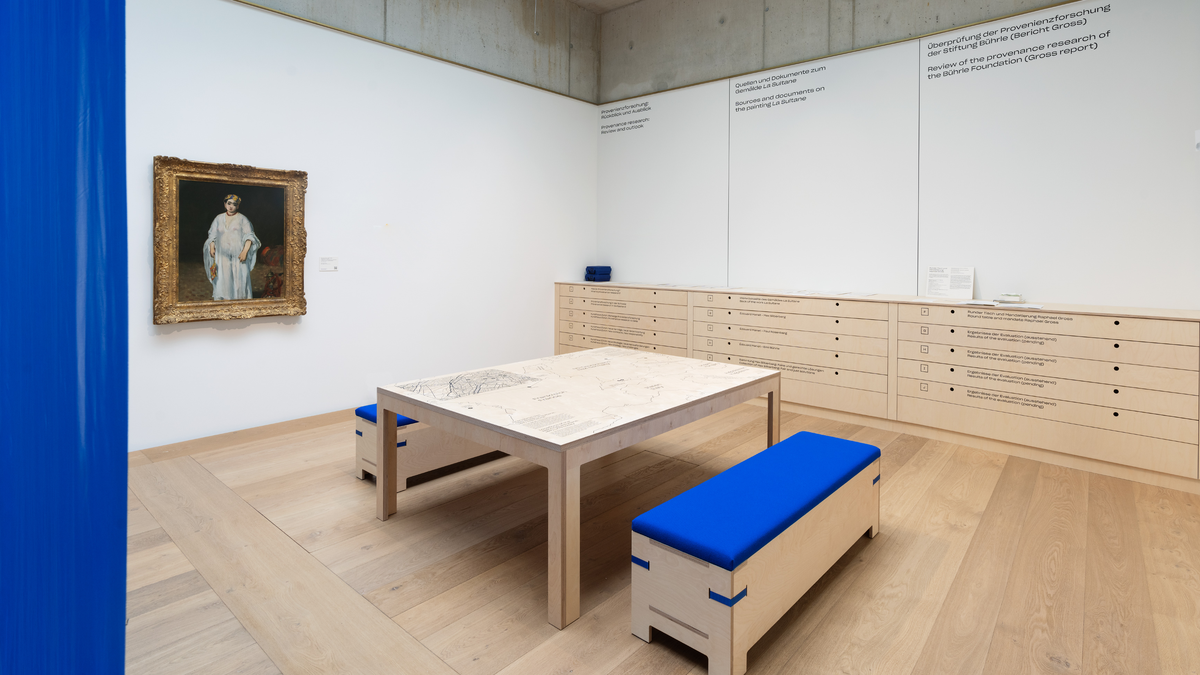
Since then, the Foundation E. G. Bührle Collection has reached an agreement with the legal successors of the Gerta Silberberg Discretionary Trust on the painting ‘La Sultane’ by Édouard Manet, and with the legal successors of Richard Semmel on the painting ‘La route montante’ by Paul Gauguin, allowing both to remain in the Bührle Collection. As a result, they will once again be on display in the new exhibition of the Bührle Collection at the Kunsthaus.
(Foundation E.G. Bührle Collection media release, 23 April 2025)
(Foundation E.G. Bührle Collection media release, 24 June 2025)
The Kunsthaus continues to pursue constant and systematic research into its own collection. In 2024, the Zürcher Kunstgesellschaft reached an agreement with the heirs of the Jewish industrialist and art collector Carl Sachs on a ‘just and fair solution’ for the painting ‘L’Homme à l’ombrelle’. The work was sold under the terms of an amicable settlement.
20. How is the Kunsthaus working with the Foundation E. G. Bührle Collection today?
There is a regular, open and constructive exchange between the Kunsthaus and the Foundation E. G. Bührle Collection. The two work together on the basis of the contractually agreed long-term loan agreement and the additional guidelines of May 2025. The Foundation is the owner of the works, while the Kunsthaus is the borrower and place of presentation.
21. What role does the City of Zurich play?
The City provides a subsidy to the Kunsthaus. It is represented on the board of the Zürcher Kunstgesellschaft, and is jointly financing the five-year project to research the provenance of the Foundation E. G. Bührle Collection, subject to conditions. The subsidy agreement commits the Zürcher Kunstgesellschaft to review the provenances of all long-term loans – which therefore also means the Emil Bührle Collection –, have the results independently evaluated, and communicate the research findings transparently. The City is represented on the board of the Zürcher Kunstgesellschaft by City Mayor Corine Mauch and Kathrin Frey, Joint Director of Culture.
D. Further information
Various Links
- Long-term loan agreement between the Zürcher Kunstgesellschaft and the Foundation E. G. Bührle Collection (in German) (2022)
- Subsidy agreement with the City of Zurich (in German) (2022)
- Report by Raphael Gross (2024) (in German)
- Media releases on provenance research (see Media database)
- Kunsthaus Zürich provenance strategy (2023)
- Washington Principles (1998) / Terezín Declaration (2009) / Best Practices (2024)
- International Council of Museums (ICOM) Code of Ethics for Museums
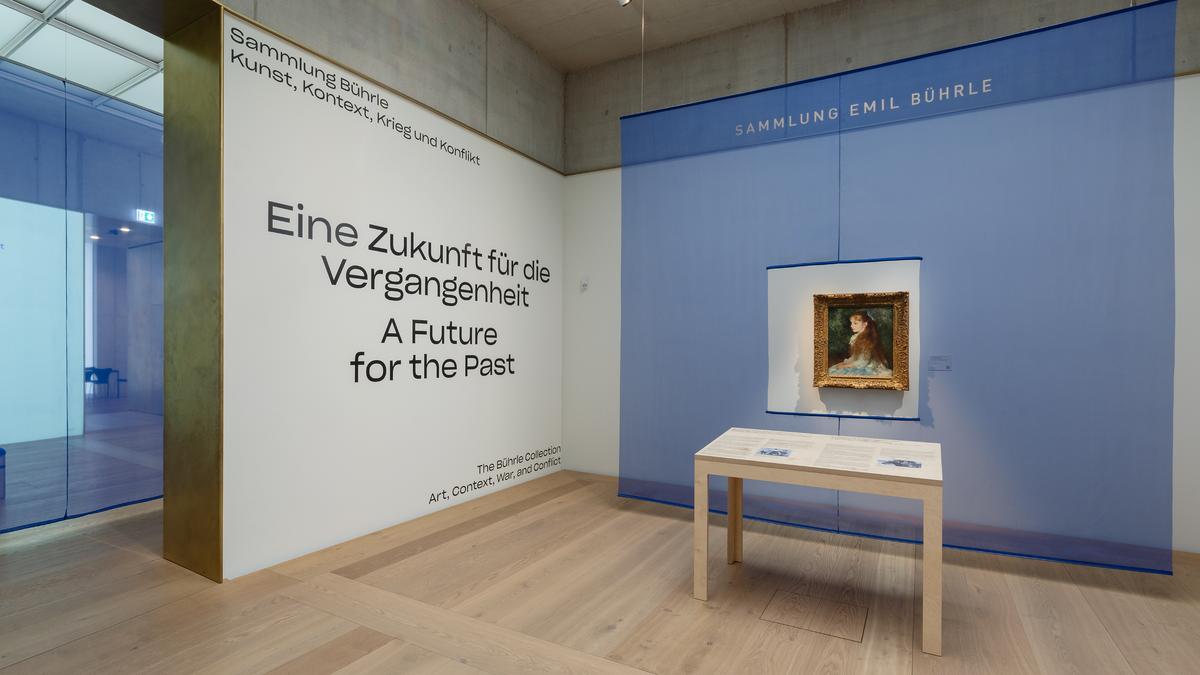
- Exhibition texts from the presentation ‘A future for the past’
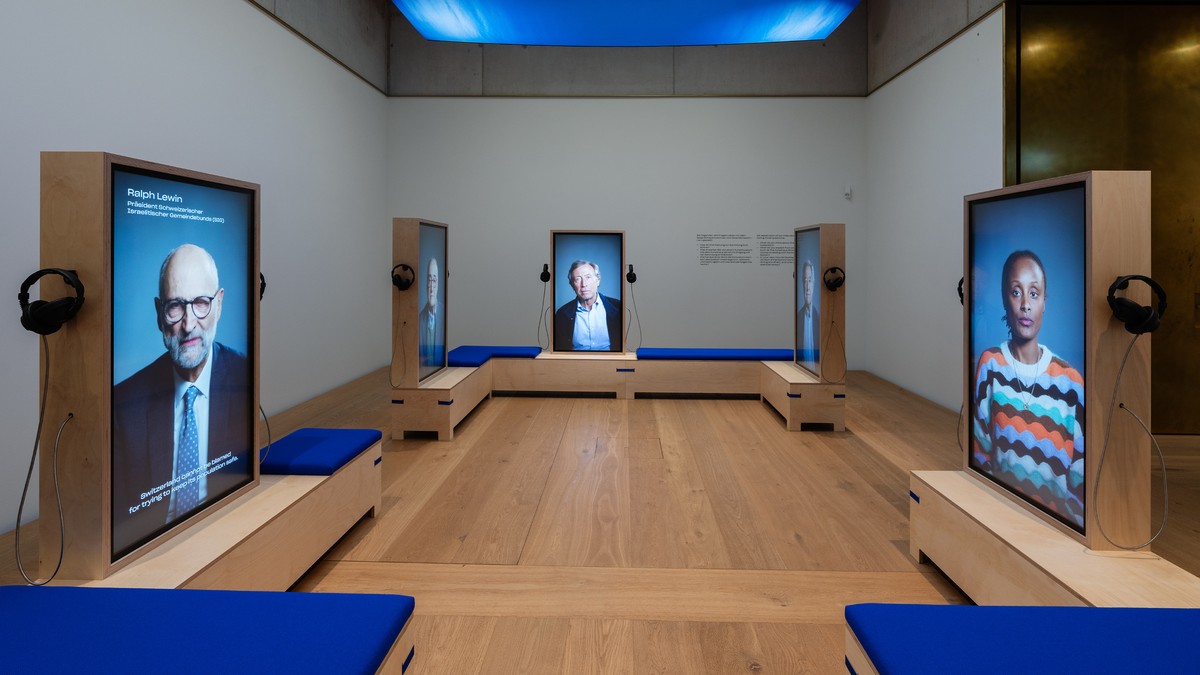
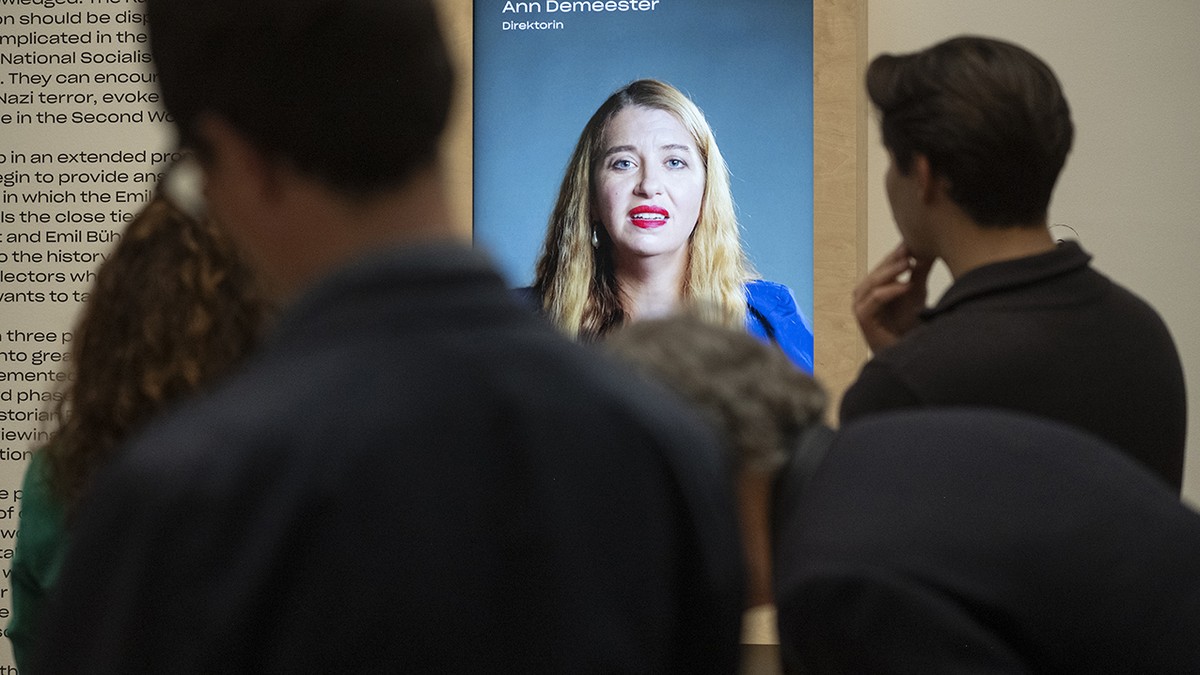
Contextual exhibition from November 2023 to September 2025